What a Proper PMO Actually Looks Like in a Modern Startup (Without Corporate Bureaucracy)
by
Dmytro Miroshnychenko


by
Dmytro Miroshnychenko
Dmytro Miroshnychenko is the founder of Miros. IT Delivery, Project & Program Management expert, PMO builder with over 11 years of commercial experience with SMB & Global companies in software development.
Last updated:
Many startup founders hear the term “PMO” and immediately think:
bureaucracy;
excessive meetings;
status reporting;
slow decision-making;
enterprise overhead.
That perception exists for a reason. Traditional PMOs were often designed for large corporations focused on process control and administrative governance. Modern startups need something very different. A proper modern PMO is not a reporting department. It is an execution enablement system. Its role is to help growing companies maintain alignment, delivery predictability and operational clarity as complexity increases.
Why Fast-Growing Startups Eventually Need Operational Structure
In early stage startups, execution often works through direct communication.
Small teams move quickly because:
everyone shares context;
founders make decisions instantly;
dependencies are limited;
priorities are obvious.
As companies scale, this naturally changes.
More teams create:
more dependencies;
more coordination overhead;
more prioritization conflicts;
more delivery risk;
more leadership fragmentation.
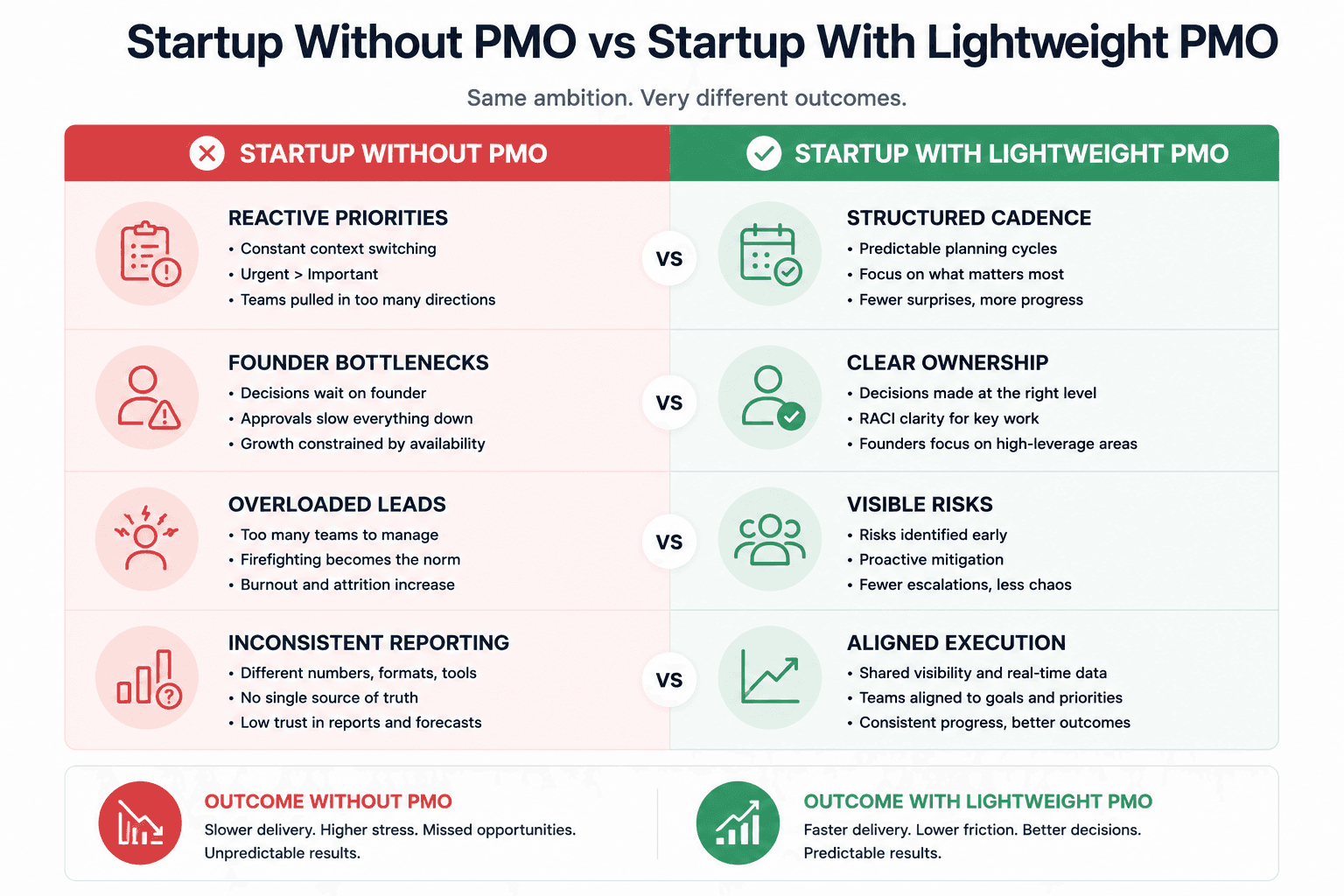
Without structure, execution gradually becomes reactive instead of predictable.
This is usually when:
deadlines start slipping;
priorities constantly change;
founders become bottlenecks;
reporting loses accuracy;
delivery quality becomes inconsistent.
The issue is rarely lack of talent. The issue is that operational complexity has outgrown the company’s execution system.
What a Modern PMO Actually Does
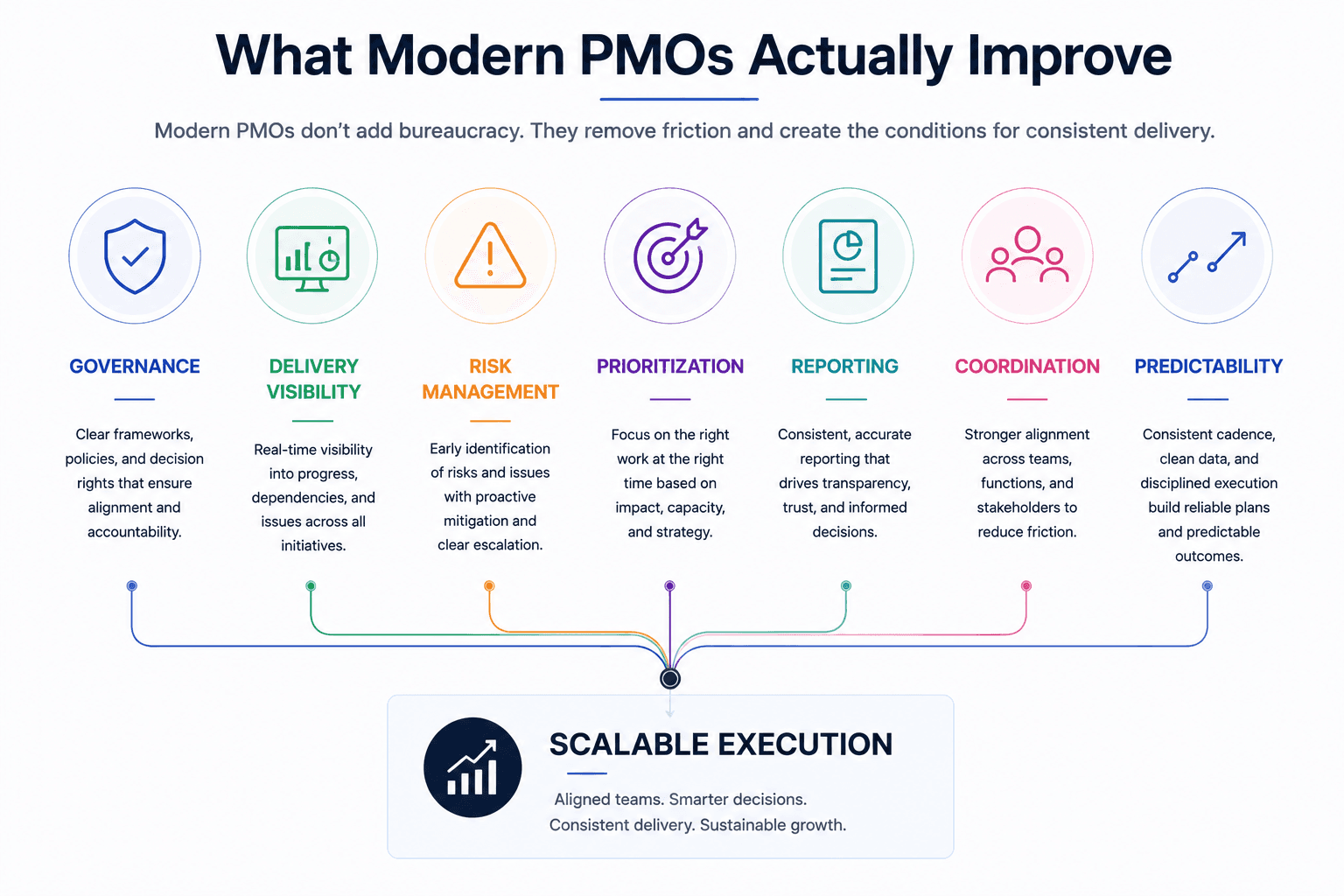
A strong PMO should not slow teams down. It should reduce friction across the organization. In practical terms, modern PMOs typically improve:
Governance
Not heavy process layers - but clear operational rules:
ownership clarity;
escalation paths;
prioritization logic;
delivery accountability;
decision visibility.
Good governance reduces confusion.
Decision-Making Cadence
Fast-growing companies often lose operational rhythm.
A modern PMO creates consistent execution cadence through:
weekly delivery reviews;
leadership syncs;
risk escalation routines;
roadmap alignment sessions;
structured planning cycles.
Predictability comes from cadence, not chaos.
Risk Visibility
Many startups discover delivery risks too late.
Strong PMOs create early visibility into:
blocked initiatives;
overloaded teams;
dependency risks;
timeline instability;
operational bottlenecks.
This allows leadership to act proactively instead of reactively.
Delivery Predictability
One of the most important outcomes of proper PMO structure is that leadership can trust delivery forecasts again. Not because teams suddenly work harder - but because execution becomes coordinated and measurable.
Standardized Execution
As companies scale, every team naturally develops different habits and workflows.
Without standardization:
reporting becomes inconsistent;
planning quality varies;
delivery quality becomes uneven;
operational overhead increases.
Modern PMOs create lightweight standards that improve consistency without damaging speed.
AI-First Companies Need Structure Even More
AI-native startups often underestimate operational complexity because early experimentation moves extremely fast.
But as products mature, lack of structure creates:
fragmented priorities;
undocumented decisions;
uncontrolled experimentation;
scaling bottlenecks;
technical coordination issues.
AI-first organizations still require:
governance;
delivery visibility;
execution discipline;
operational clarity.
In many cases, they require it even more than traditional software companies.
What a Healthy Startup PMO Looks Like
The best startup PMOs are usually lightweight and highly practical and focus on enabling execution - not controlling people.
A healthy PMO environment often includes:
clear delivery ownership;
structured planning cadence;
transparent reporting;
visible operational risks;
aligned priorities;
standardized workflows;
leadership visibility into execution.
When implemented correctly, teams often feel less operational stress — not more.
Common Misconception: “PMOs Slow Companies Down”
Poorly designed PMOs absolutely can slow organizations down. But the absence of structure creates a different problem - scaling chaos.
The goal is not to introduce corporate bureaucracy. We need to aim to create enough operational clarity for the company to scale execution predictably. So, the strongest startups are usually not the ones operating in constant firefighting mode - they are the ones that build operational systems early enough to sustain growth.
Key Takeaways
Modern PMOs are execution enablement systems - not reporting factories.
Startups eventually outgrow informal execution models.
Governance and structure improve speed when implemented correctly.
Delivery predictability comes from operational clarity and cadence.
AI-first companies still require disciplined execution systems.
Lightweight PMO structure can significantly improve scalability without creating bureaucracy.
Most growing software companies do not fail because of weak engineering talent. They struggle because operational complexity eventually outpaces execution structure.
At Miros, we help startups and SMBs build lightweight PMO and delivery governance systems that improve predictability, alignment, and scalability - without introducing unnecessary bureaucracy.

Insights
Read more articles



Questions & answers
Frequently
Asked Questions
We already have PMs. Why would we need this?
Most companies we work with already have PMs. The issue is not the people - it’s the system they operate in. Without a clear delivery structure: - PMs work differently - priorities shift constantly - decisions are unclear - delivery becomes inconsistent What we implement is a single operating model: - how projects start & planned - how they are executed - how they are tracked - how decisions are made Your PMs don’t get replaced - they become effective inside a system that works.