How Delivery Chaos Impacts Investor Confidence
by
Dmytro Miroshnychenko


by
Dmytro Miroshnychenko
Dmytro Miroshnychenko is the founder of Miros. IT Delivery, Project & Program Management expert, PMO builder with over 11 years of commercial experience with SMB & Global companies in software development.
Last updated:
Investor confidence is not built only on vision, funding rounds, or growth projections. It is built on one critical factor: the ability of a company to execute predictably.
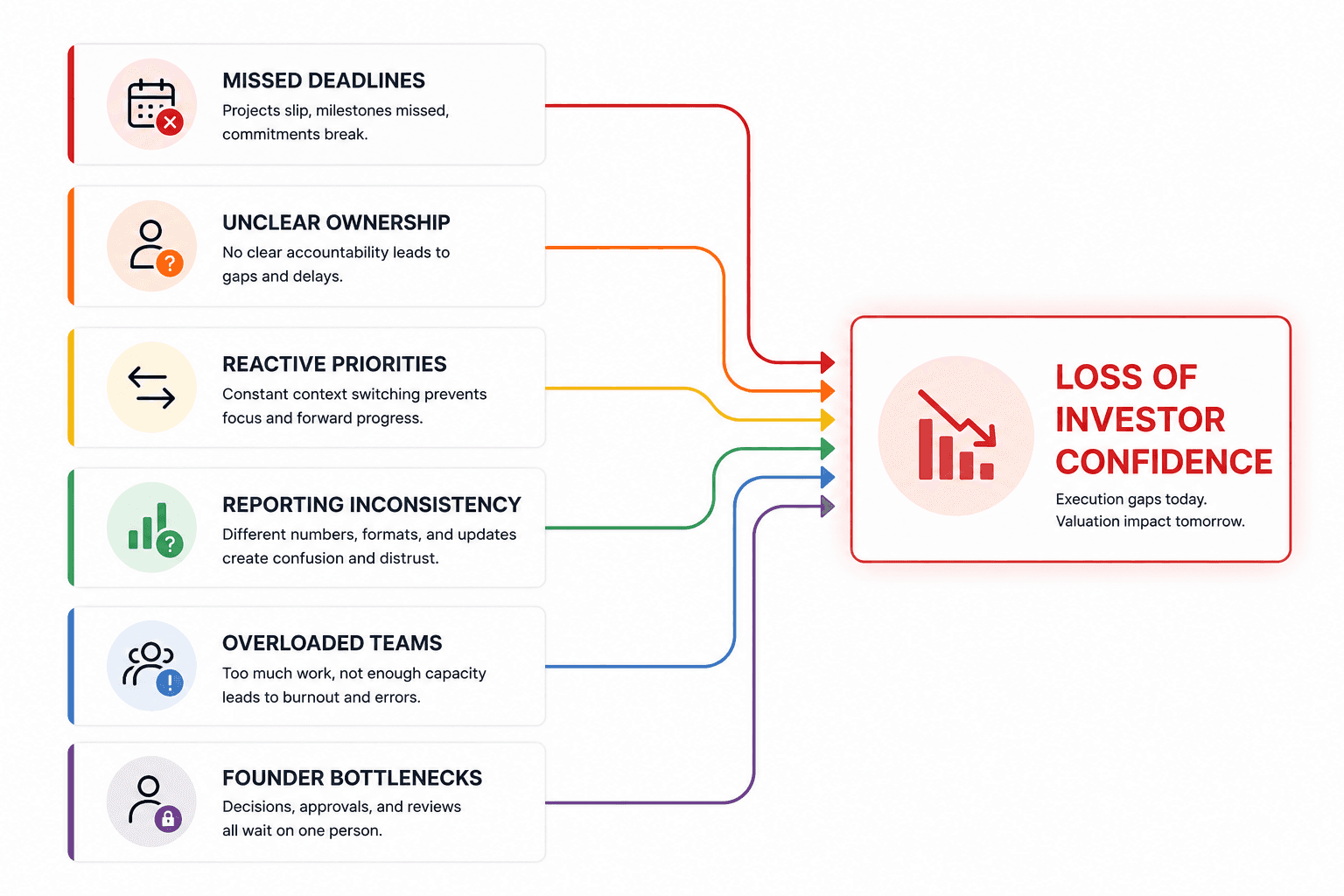
Many software and AI startups underestimate how quickly delivery chaos becomes visible externally. At first, the symptoms appear operational:
missed deadlines;
unclear ownership;
overloaded teams;
shifting priorities;
inconsistent reporting;
constant “urgent” work.
Internally, these issues often feel manageable. Externally, investors interpret them very differently.
They see execution risk.
Delivery Chaos Is Usually a Leadership Visibility Problem
Investors rarely expect perfection from growing companies. What concerns them is the absence of operational control.
A startup can survive technical mistakes, roadmap pivots, and product changes. What becomes dangerous is when leadership can no longer answer basic execution questions with confidence:
What is actually delayed?
Who owns recovery?
Which priorities changed?
What risks threaten delivery?
How accurate are current forecasts?
Can the company scale execution further?
When answers become inconsistent, investor confidence begins to decline - even if revenue growth still looks healthy.
Common Signals Investors Notice Immediately
In delivery audits and stabilization engagements, the same patterns appear repeatedly.
1-Leadership Operates in “War Mode”
Everything becomes urgent. Decisions are reactive. Teams constantly switch priorities. Founders become escalation managers instead of strategic leaders.
This signals operational instability.
2-Reporting Becomes Difficult to Trust
Different teams report different realities. Delivery statuses constantly change. Forecasts lose credibility.
Once reporting becomes unreliable, investors stop trusting timelines.
3-Execution Depends on Specific Individuals
Critical knowledge lives inside a few people. Processes are undocumented. Delivery slows whenever key individuals are overloaded or unavailable.
This creates scaling risk.
4-Teams Stay Busy But Momentum Drops
One of the most dangerous signals is high activity with low strategic progress.
A company may appear productive while actually losing alignment and delivery efficiency.
Why This Matters More in AI-First Companies
AI-native startups often move extremely fast early on. That speed creates momentum but also operational fragmentation.
Without delivery structure:
priorities drift;
experimentation becomes uncontrolled;
technical debt accumulates;
teams lose shared context;
founders become bottlenecks.
Investors increasingly look for operational maturity alongside innovation.
The companies that scale successfully are usually not the fastest-moving organizations initially they are the ones that establish repeatable execution systems early.
What Strong Delivery Organizations Do Differently
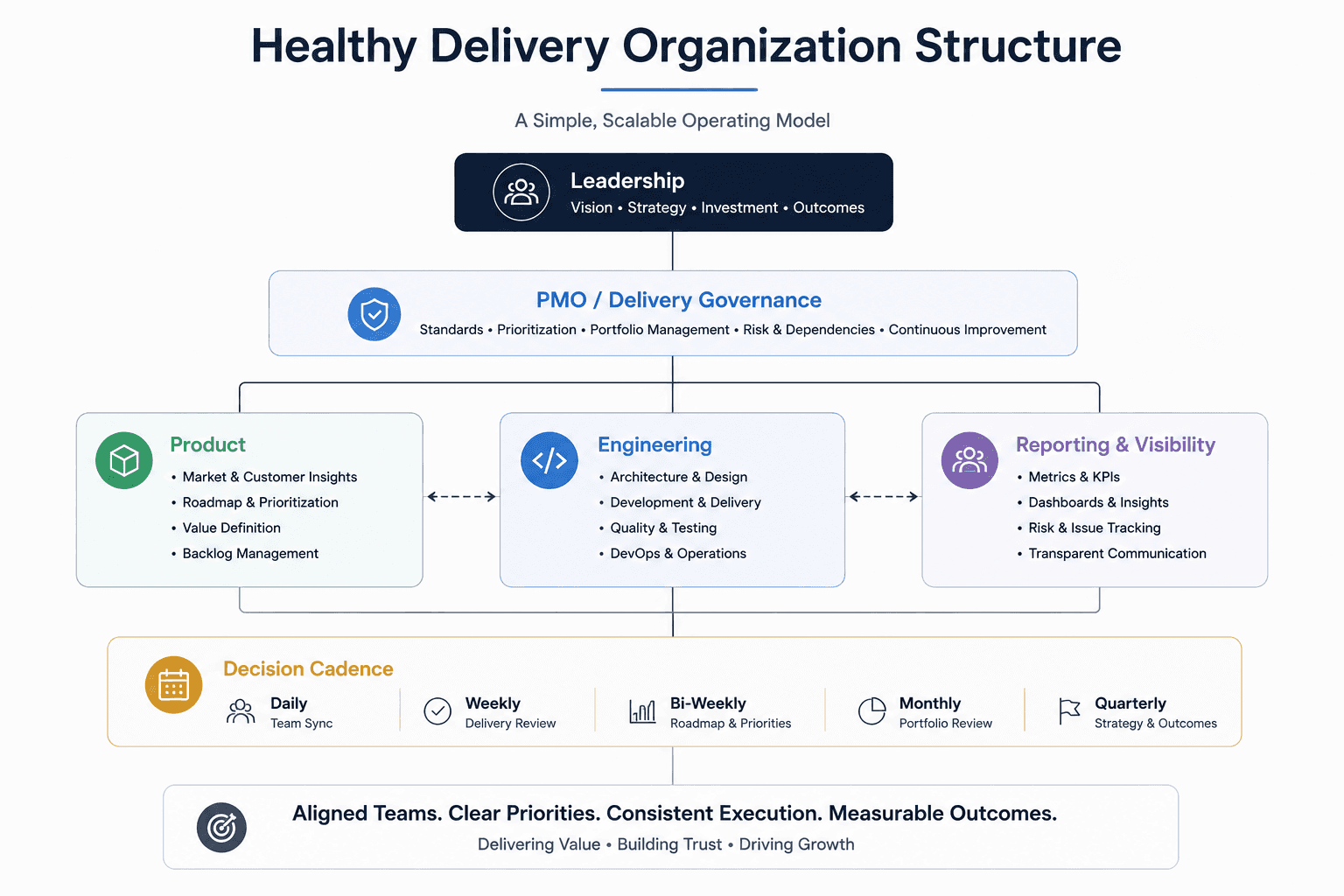
Healthy delivery organizations create confidence through visibility and consistency.
They typically have:
clear ownership structures;
standardized execution cadences;
transparent reporting;
delivery governance;
prioritization discipline;
operational risk visibility;
documented decision-making.
This does not require heavy corporate bureaucracy.
In most growing software companies, even lightweight operational structure dramatically improves execution predictability and stakeholder confidence.
Key Takeaways
Investors lose confidence faster from operational chaos than from product challenges.
Delivery unpredictability signals scaling risk.
Teams can appear productive while execution quality deteriorates underneath.
Operational maturity becomes increasingly important as companies scale.
Strong delivery governance improves not only execution but investor trust.
—————————————————————————————————
Execution problems rarely appear overnight. They accumulate gradually until delivery predictability, team alignment, and stakeholder confidence begin to break down.
At Miros, we help software and AI companies stabilize delivery operations, improve execution visibility, and build scalable operational structures without unnecessary bureaucracy.

Insights
Read more articles



Questions & answers
Frequently
Asked Questions
We already have PMs. Why would we need this?
Most companies we work with already have PMs. The issue is not the people - it’s the system they operate in. Without a clear delivery structure: - PMs work differently - priorities shift constantly - decisions are unclear - delivery becomes inconsistent What we implement is a single operating model: - how projects start & planned - how they are executed - how they are tracked - how decisions are made Your PMs don’t get replaced - they become effective inside a system that works.